
Peripheral Arterial Ultrasound & PAD Testing in Flemington, NJ
Universal Ultrasound Diagnostics provides noninvasive lower-extremity arterial ultrasound in Flemington, New Jersey to evaluate blood flow in the arteries of the legs. Duplex ultrasound combines vascular imaging with Doppler measurements to help identify areas of narrowing, blockage, or reduced circulation associated with peripheral artery disease (PAD).
Sudden severe leg pain, a cold or pale limb, new numbness or weakness, or other signs of an acutely threatened limb. These require urgent evaluation rather than routine outpatient scheduling — go to the nearest emergency department or call 911.
What is peripheral arterial ultrasound?
A peripheral arterial duplex is a noninvasive ultrasound examination of the arteries supplying the legs. It allows the technologist and interpreting clinician to evaluate vessel anatomy and blood-flow patterns.
Why might it be ordered?
What happens during the test?
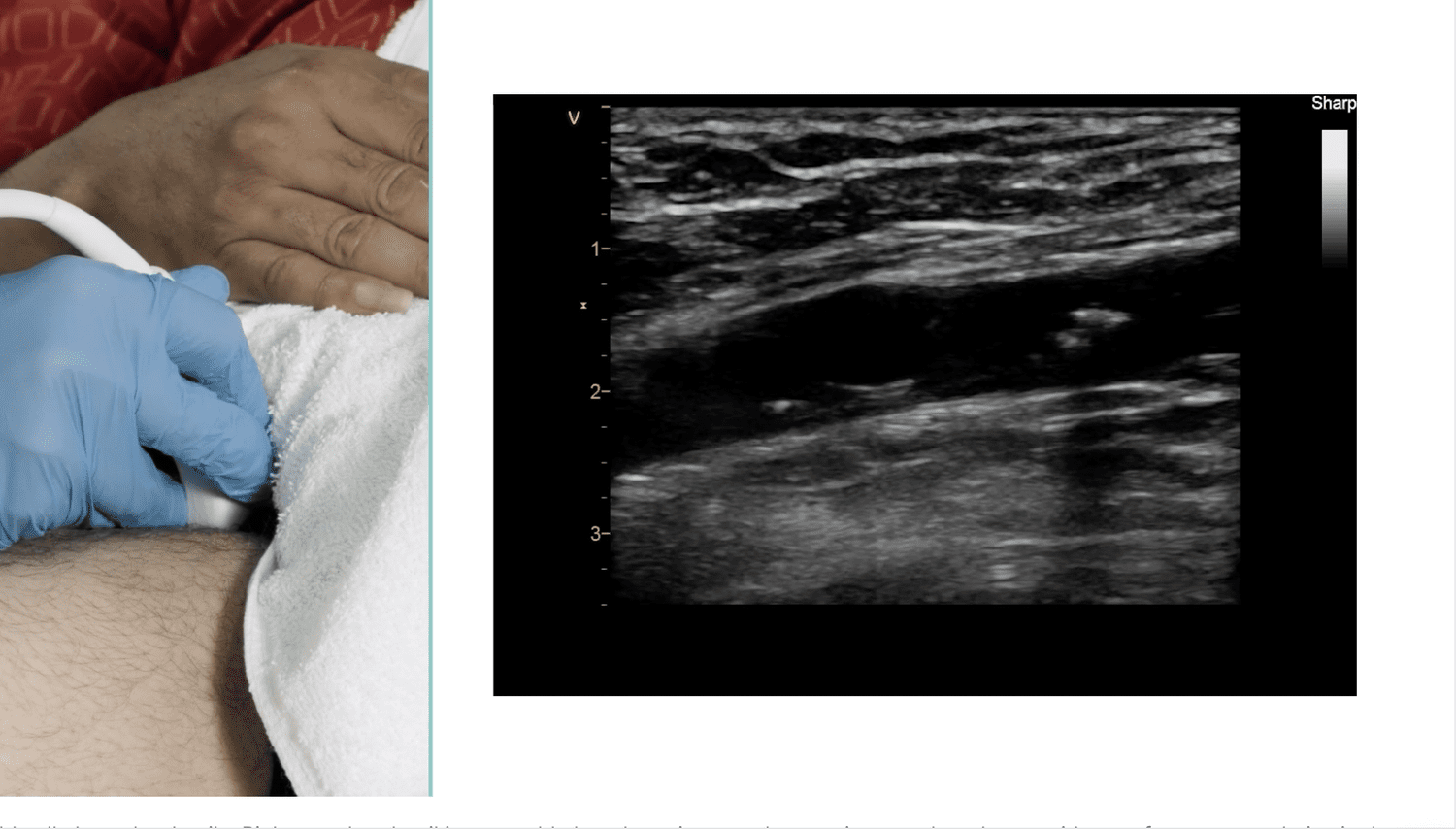
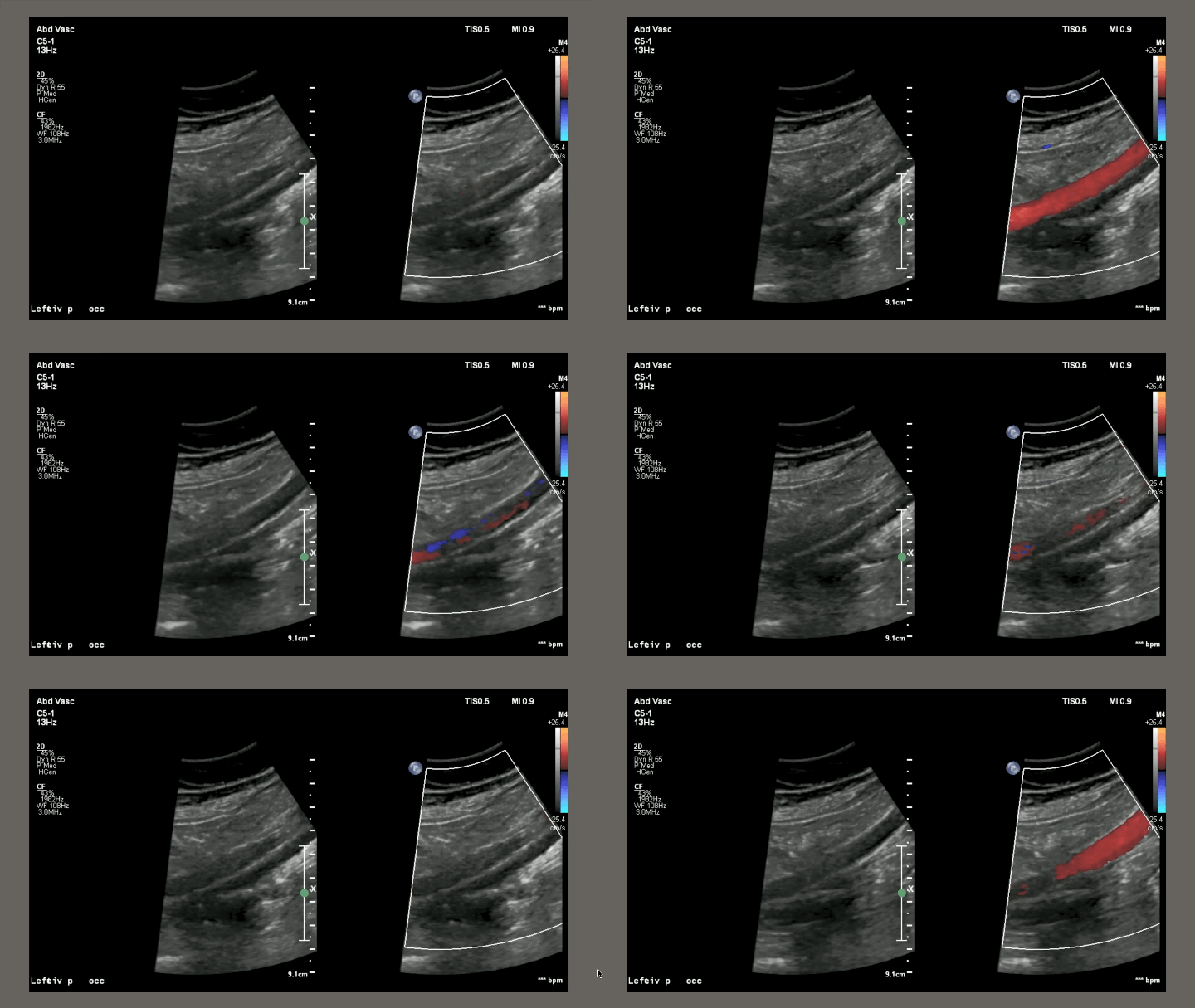
Ultrasound gel is placed over the legs and a transducer is moved along the arterial pathway. Doppler measurements help assess the direction and velocity of blood flow. This examination may be paired with physiologic testing such as ABI/PVR when ordered.
Gel & positioning
Ultrasound gel is applied and you're positioned comfortably for imaging along the leg.
Duplex arterial imaging
The transducer is moved along the arterial pathway to evaluate vessel anatomy, following our accredited protocol.
Doppler flow assessment
Doppler measurements assess the direction and velocity of arterial blood flow, often paired with ABI/PVR when ordered.
Areas examined, timing & results
What areas are examined?
Imaging covers the lower-extremity arterial system, combining duplex imaging with Doppler velocity measurements, following our accredited protocol and the exact study ordered by your clinician.
How long does the exam take?
Typical duration is 45 minutes.
What happens after the ultrasound?
Reports are sent directly to your doctor quickly and securely.
Stat results are provided immediately, routine results within 24 hours.
Frequently Asked Questions
What is PAD?
Peripheral artery disease is a condition in which narrowed or blocked arteries reduce blood flow to the limbs, most often the legs.
Can ultrasound find blocked leg arteries?
Duplex ultrasound can identify abnormal flow patterns and help locate areas of arterial narrowing or occlusion. The interpreting clinician determines the significance of the findings.
Is arterial ultrasound painful?
The test is noninvasive and usually painless, although pressure from the transducer or blood-pressure cuffs used in related physiologic testing may cause temporary discomfort.
What is the difference between arterial ultrasound and ABI?
Arterial ultrasound creates images and Doppler measurements along the arteries. ABI compares ankle and arm blood pressures to assess circulation. The tests provide complementary information and may be ordered together.
Do I need an order?
Policy varies by insurance-billed versus self-pay testing: you don't need a physician order if you're self-pay testing, you'll need an order if you go through insurance, with appropriate CPT code and symptomatology ICD 10 code
How long does the exam take?
Typical duration is 45 minutes.
Concerned About Leg Circulation?
Schedule online or call/text our Flemington office. If you have urgent symptoms, seek emergency care.